

There are plenty of things I’ve learned to let go of in life: Perfectionism (weeelll, working on it). The need to be the best. The idea that finishing something means it can’t still be flawed. But there is one tiny, oddly specific thing that still makes my eye twitch like a caffeinated rabbit: the word “animations.”
Now before you rush to the comments to tell me that language evolves (it does), or that I’m being ridiculously pedantic (yes. Yes I am.), let me explain why this particular linguistic crime against humanity sticks in my craw.
Animation Is Like Music (Bear With Me Here)
In the animation world—at least the one I grew up in, back when we carved our drawings on stone walls and ran around with flickering torches to watch them move—the word “animation” is a mass noun (or so says grammar experts). Like the words “furniture”, “software”, or “music.”
I mean, you wouldn’t say: “I listened to some musics today.” You would say: “I listened to music.”
In the same way, you don’t traditionally say: “I make animations.” You say: “I make animation.”
So when I hear someone say: “I love Pixar’s animations,” that’s nails-on-a-chalkboard wrong. Why does it bother me so much? Animation isn’t a product—like a collection of little wiggly things you can count like…wiggly things. It’s a discipline. A craft. A performance. It’s acting. It’s dance. Built one painstaking drawing at a time.
When I started in animation, back in the 90s—long before GIFs, social media, and those motion UI widgets that make websites (and the viewer) feel like they’re having mild seizures—animation meant more than interchangeable widgets that wiggle. It was, as Frank and Ollie told us, the illusion of life.
And it was singular. Always singular.
So Where Did “Animations” Come From?
The short answer: I have no idea. But I can guess the internet and software pipelines crawled out of the digital primordial ooze and ruined everything.

Once animation became something you could export, label, drop into a folder, and attach to a button hover, people started thinking of it as just objects of motion. Walk animation. Idle animation. Attack animation.
Inside a game engine? That’s fine. It’s technical shorthand for animation clips. I get it. I’m not a zealot. But when that language bleeds out into general conversation like some kind of linguistic oil spill, something subtle changes. Animation stops being an art medium and starts being inventory. It becomes something you stock on shelves, like canned goods.
“When animation stops being a medium and starts being inventory, something important gets lost.”
Why This Bothers Me (And Why It’s Not Just Old Man Yelling at Cloud)
This isn’t really about pluralization—though I am happy to die on this particular grammatical hill, with a Blackwing pencil in fist raised defiantly at the sky. It’s about how we think about creative work. And as computer technology does an increasing share of that work, the distinction matters even more.
When you say “animations,” you’re not technically wrong. Smart people tell me that English allows mass nouns to be temporarily “counted.” We do it all the time: two coffees, three waters, several wines (make sure you have a designated driver). But when applied to art, that shift (with a silent f) carries baggage.
“Animations” implies interchangeable units. Deliverables. Assets to be shipped like wiggling widgets off an assembly line. Sure, I’ve spent plenty of my career delivering assets. I’ve been in the ink and paint trenches. I’m not precious about production realities, or the fact that sometimes you just need to get the effing thing done and ship it. But I am adamant that animation is more than the sum of its files.
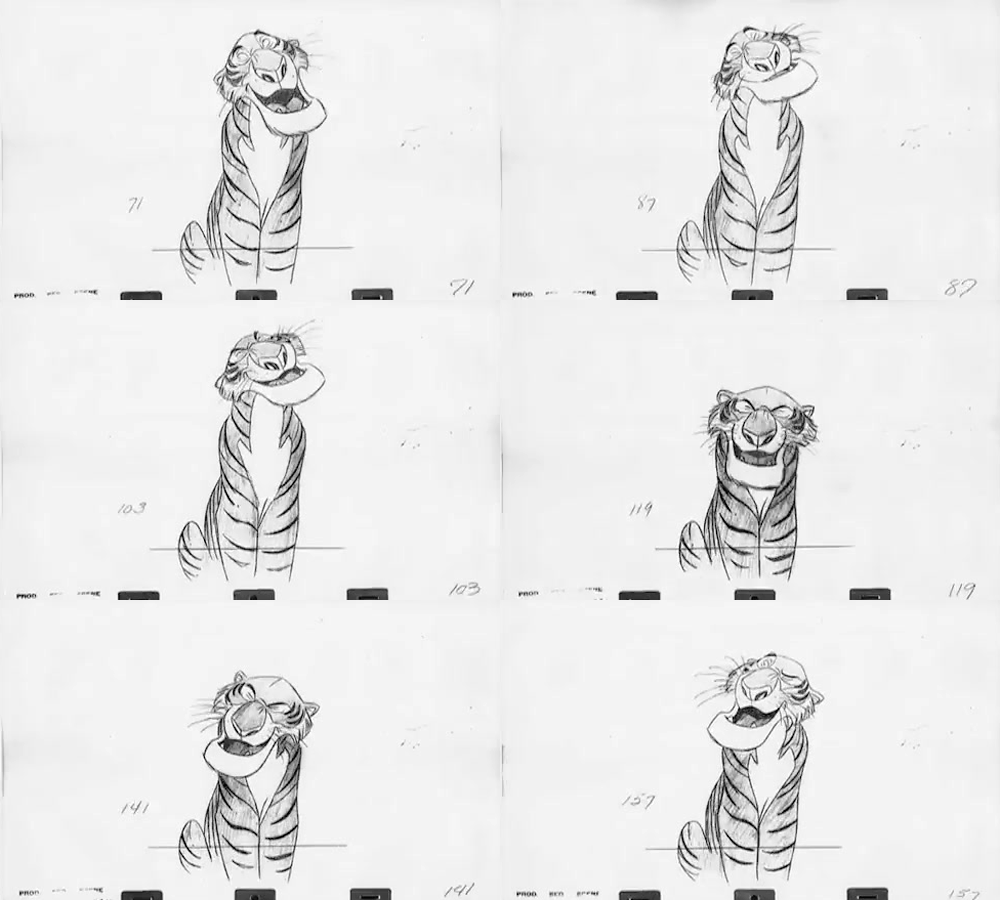
A Small Thing, But Not a Small Idea
Of course I know that language shifts whether we like it or not—like tectonic plates, or my lower back after six straight hours at the drawing table. I’m not trying to freeze English in amber like some kind of linguistic mosquito preservation project. But every now and then, it’s worth noticing what we lose when our words drift.
Animation isn’t just stuff that moves.
It’s thought made visible. Performance. Emotion. Constructed frame by painstaking frame.
And for me, at least, that still deserves to be singular.
Now if you’ll excuse me, I have some clouds to yell at.
I will die right alongside you on that hill Eddie.
A while back I was watching a shoestring-budget film of Walt's pre-Mickey days. They had the occasional factual error that gave my eyelid a twitch, but when the actor playing Roy said " We have to lower the cost of our animations," I bailed. Not everyone agrees on the details of Walt and Roy's early days, but NO ONE back then was calling their films "animations."
Blackwings up!
YEA and AMEN ! This is most certainly true.
https://media.giphy.com/media/XZ7dUs9qla4jXNMNwD/giphy.gif